#manchester

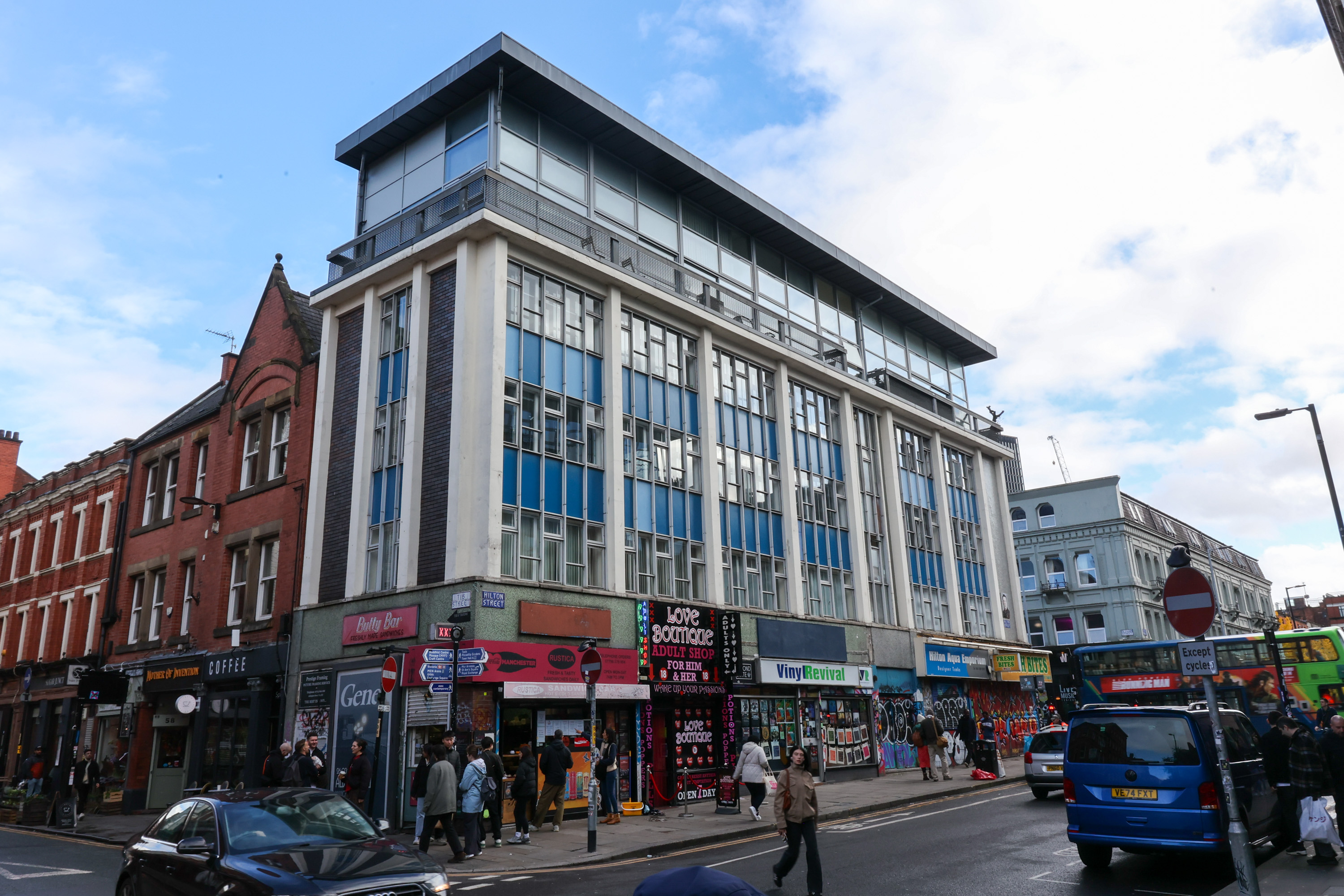
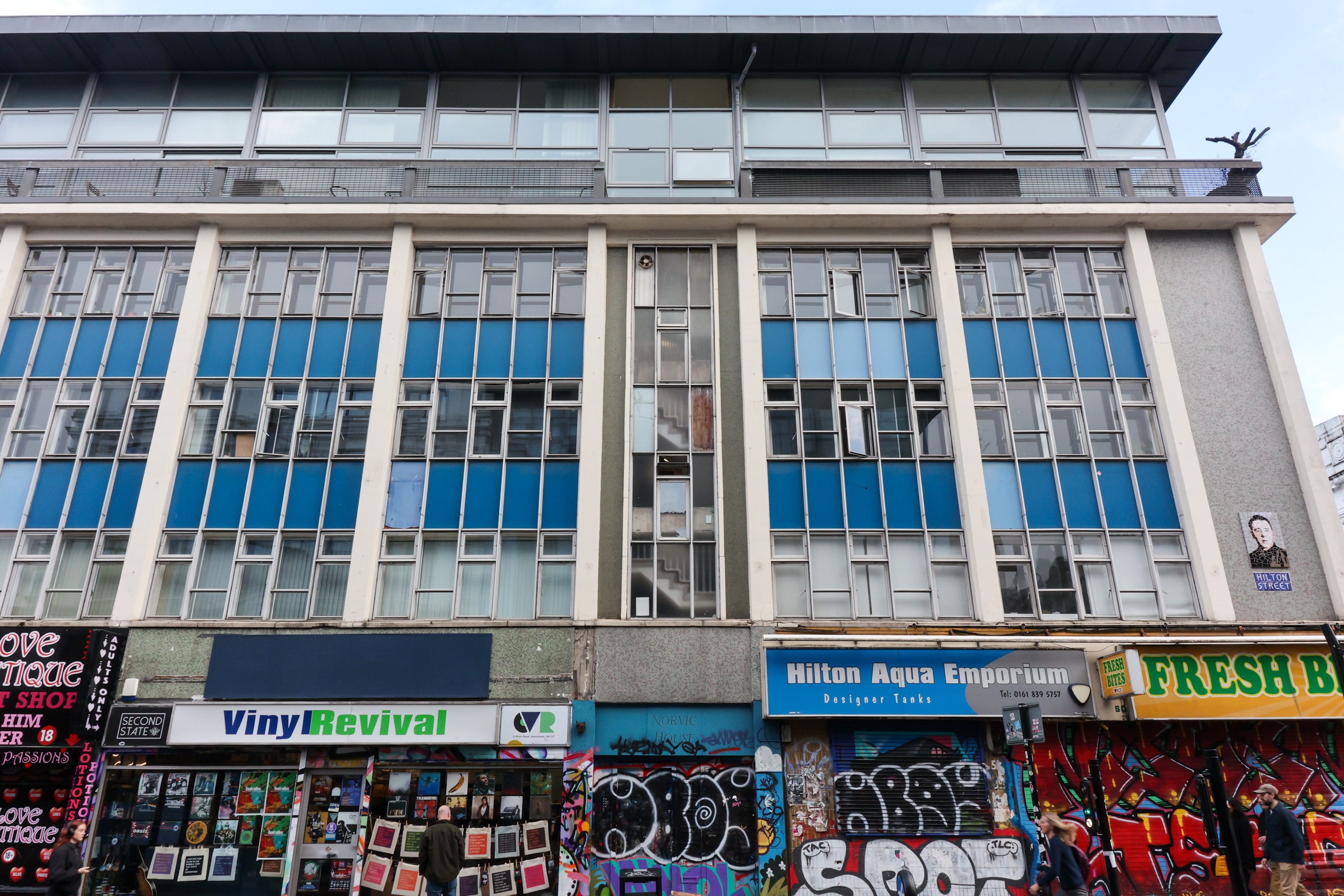
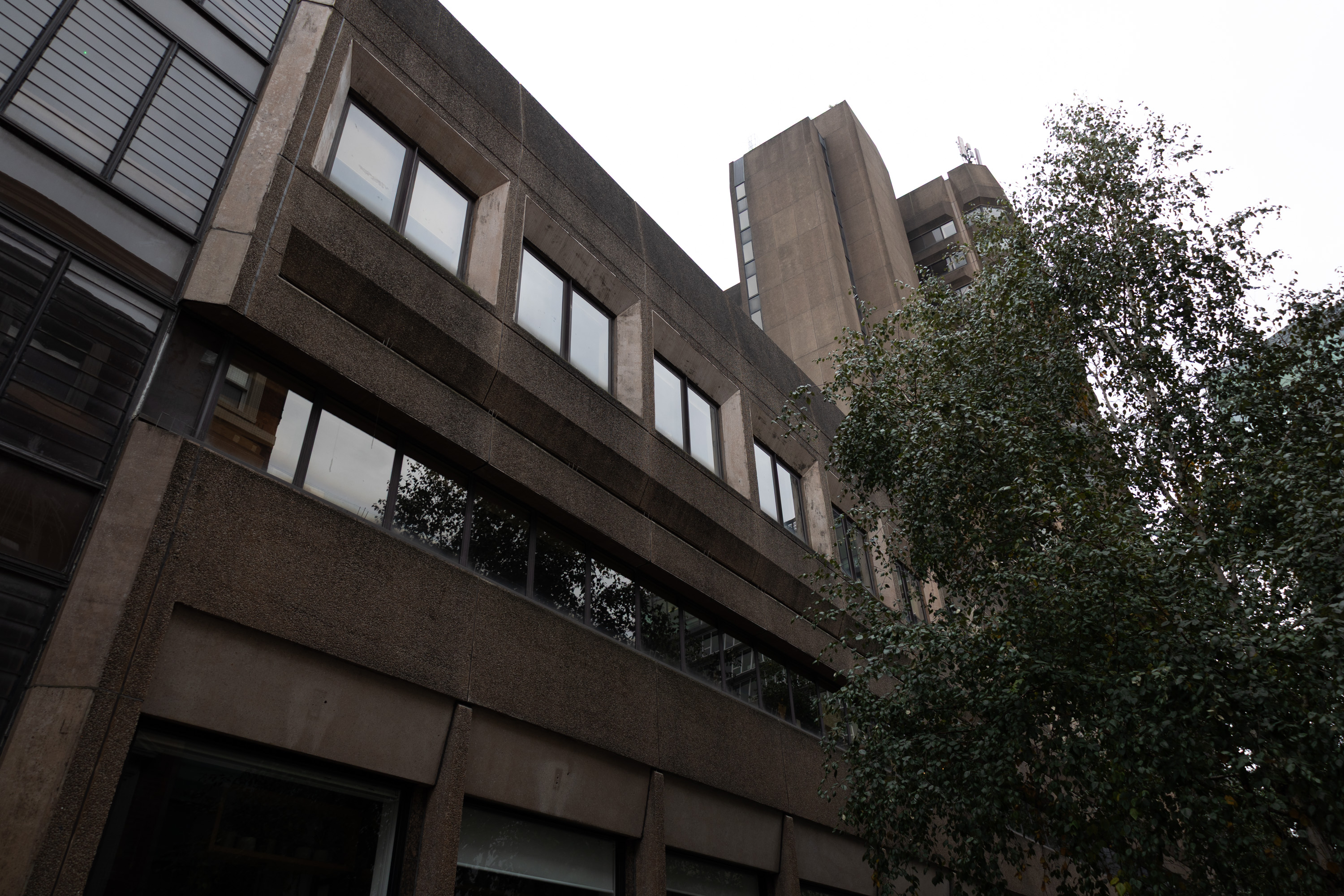
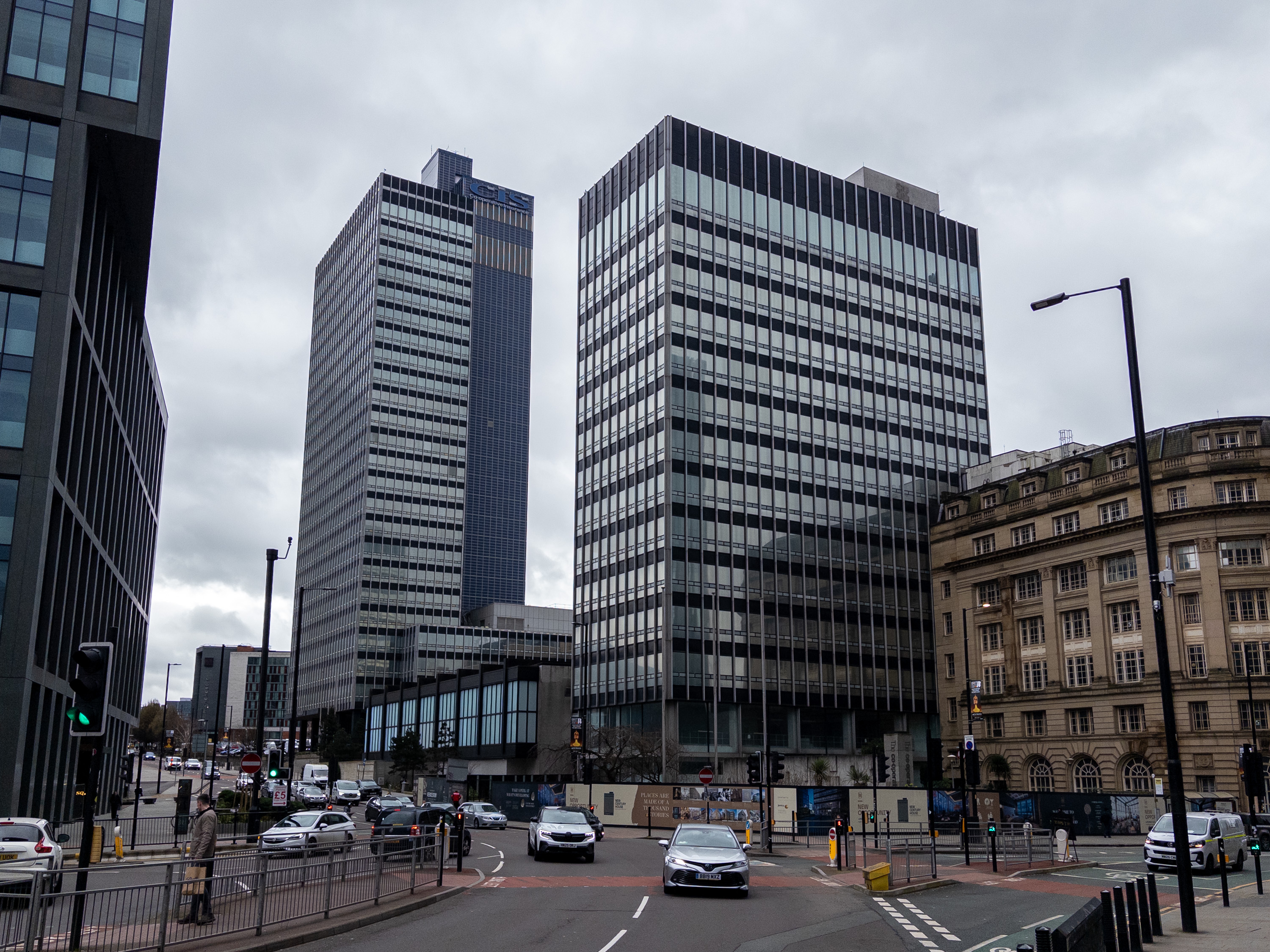
24-36 High Street, Manchester, 2025

A group of people walk past a large, grey, multi-storey building with many windows and graffiti along its lower level. The weather is overcast, and the building appears old and worn, with a red brick structure on the left and street signs visible.
A tall, rectangular brutalist building with dark and light concrete sections stands under a partly cloudy sky. The lower facade is covered in graffiti. A blurred yellow tram passes in the foreground. Other modern buildings are visible to the sides.
A cityscape view shows a blocky, modernist grey building with many windows. Surrounding it are older brick and contemporary buildings. The nearest wall at street level features colourful graffiti. The scene is cloudy with sparse traffic on the roads.

24-36 High Street is a poorly (sic) quality example of utilitarian Brutalist Architecture.

Manchester City Council planning report

Don’t hold back! Today’s rabbit hole is courtesy of Reddit user 3ssar, who commented:

Saw Lana Del Rey’s first ever UK show in (under) there, among others. Always stunk as a venue and had pillars in the middle, blocking the view of the stage

Lana Del Rey’s first UK show! They should be putting a blue plaque on it, not demolishing it in favour of 361 apartments with commercial space on the ground floor 💔

76 – 80 Deansgate, Manchester, 2025

A city street with modern and older buildings. Visible venues include BE AT ONE bar with black signage, a bright blue restaurant with pink and red details, and other shops. People walk on the pavement. The sky is clear and the road has bollards.

Pinned by manchesterhistory.net as being circa 1930, which feels about right. At least in the main part of the building, the windows appear to have been refurbished, but retain their original charm and slender frames.

The manchesterhistory.net post references historical photos of the building, but the links have broken – here are the updated links for 1938 and 1976.

Mulberry Street, Manchester, 2025

A two-storey brick building with tall windows, wooden and shingle details, and a decorative green metal archway beside a black garage door. The building is flanked by older red-brick structures and a black streetlamp stands in front. Parked cars line the street.

Walking out of my hotel, I found this charmingly detailed building, featuring horizontal brickwork on the ground floor, and wooden panelling and shingles on the first floor. Appearing to be used as a dwelling, I was surprised to see it amongst much larger, and much older (not least St Mary’s RC Church of 1794, next door but one) buildings, as well as modern 21st century high rises of central Manchester.

Mulberry Passage, which passes underneath it, is also part of a network of passages decorated with public art in tribute to scientist John Dalton.

Exhibition: Architecture for the People, Manchester Central Library

A hand-drawn architectural plan shows a cross-section of a multi-storey triangular building. The plan is pinned to a wall, surrounded by black-and-white architectural photographs and yellow notes, one labelled “DOMESTIC” in uppercase letters.
A display board shows six architectural drawings and photos of an airport extension. Some images are sketches of roads and terminals, others are black-and-white construction photos or site plans. A yellow label reads AIRPORT EXTENSION. 1972 at the bottom.
A collage of six photos shows the construction and celebration of a Chinatown gate and pavilion. Four are black-and-white images of the building process, and two are colour photos of finished structures and a street festival crowd. A note reads CHINATOWN 1986-87.

Architecture for the People, a free exhibition at Manchester Central Library, showcases the city’s own City Architect’s Department and the incredible range of municipal buildings they designed between 1902 and 2003 — from iconic landmarks like the Free Trade Hall to everyday essentials such as schools, libraries, public baths and even mortuaries.

I’ve been taking notes — I’m looking forward to seeing a few modernist buildings designed by the department I didn’t hitherto know about.

The exhibition is curated by Martin Dodge (University of Manchester) and Richard Brook (Lancaster University). It’s on display for just a few more weeks, until 28 February, so don’t miss it.