#art deco

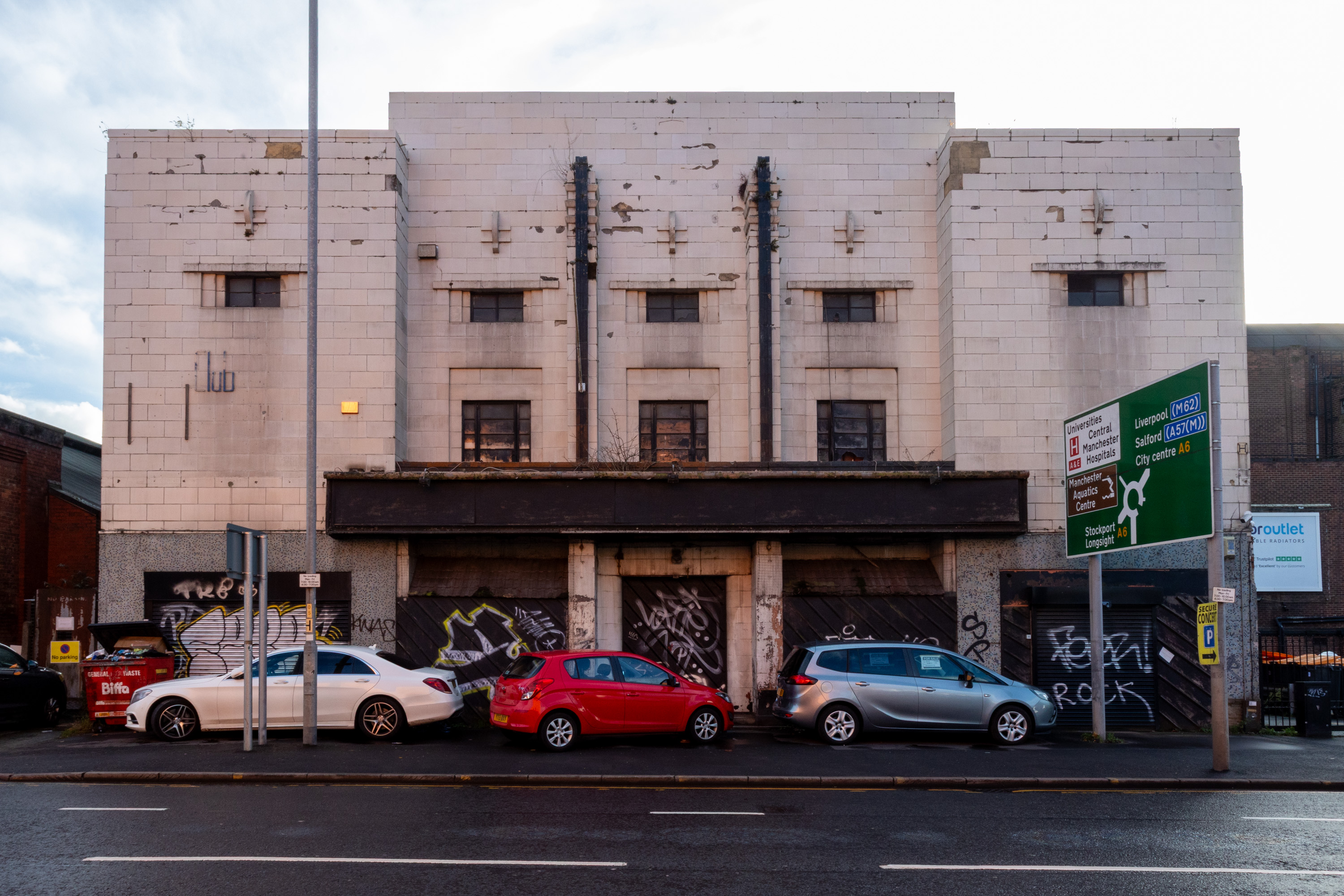
Apollo Theatre / O2 Apollo Manchester (Hyde Road entrance), 2025

A derelict, white Art Deco building with boarded-up windows and graffiti on its facade. Four cars are parked in front. A street sign and lamp post are visible on the pavement. The sky is partly cloudy.

The side entrance to the O2 Apollo Manchester, the main entrance featuring a glazed white terracotta façade on Stockport Road. Why two entrances? UKmender on Cinema Treasures explains:

…the entrance on Hyde Road was a common ploy used where many cinemas were located at busy corners. Though the main frontage is on Stockport Road, it was originally thought advantageous for the building to also have a presence on Hyde Road, directly opposite the popular Manchester Hippodrome theatre.

(…)

Both entrances were, originally, similarly decorated and both contained box-offices. The Hyde Road entrance also gave access to the integral cafe and ballroom. Some attempts were made to run it as a separate venue but it is currently abandoned.

Notice, too, the barely visible Club signage on the left side of the building.
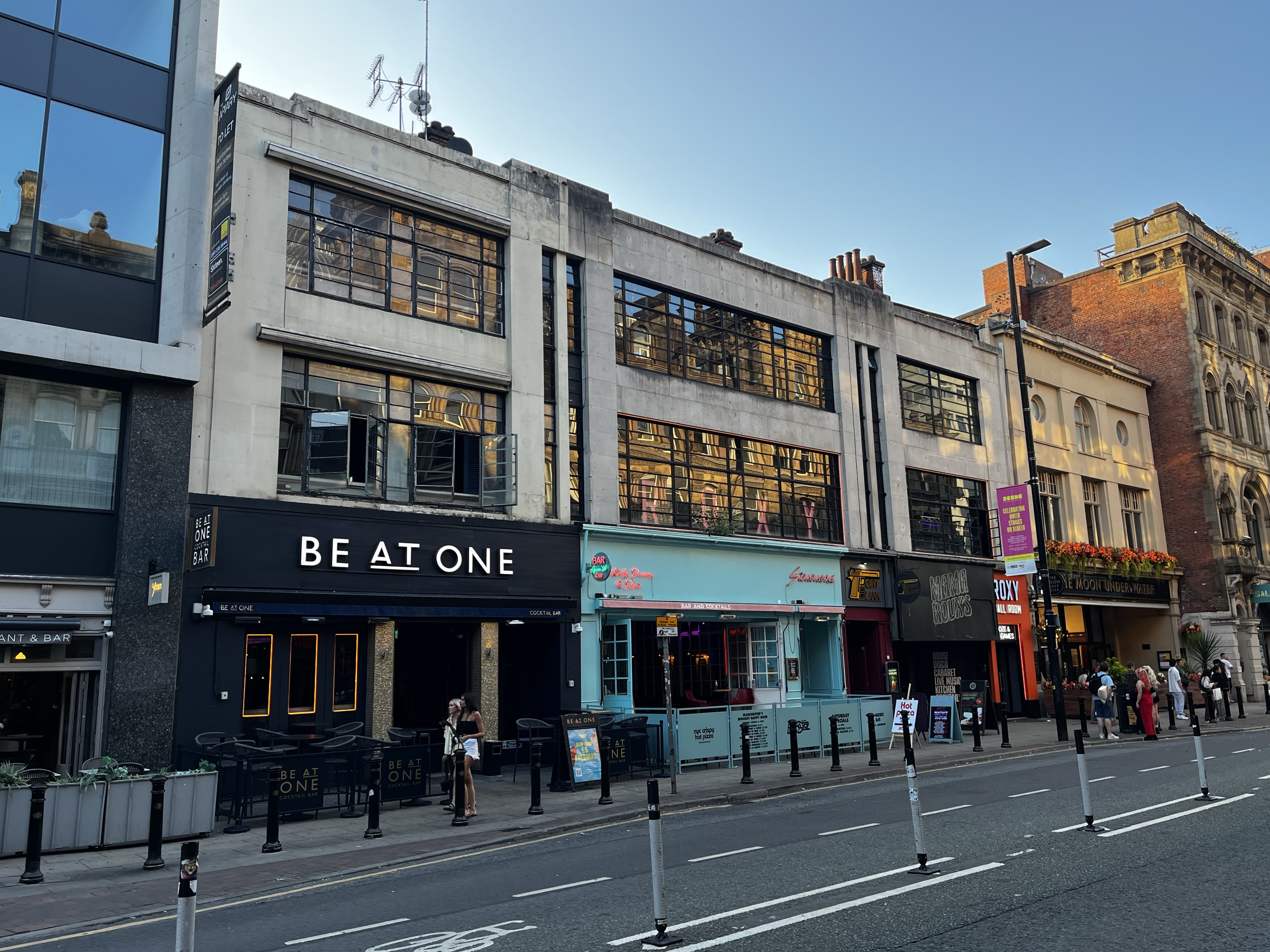
76 – 80 Deansgate, Manchester, 2025

A city street with modern and older buildings. Visible venues include BE AT ONE bar with black signage, a bright blue restaurant with pink and red details, and other shops. People walk on the pavement. The sky is clear and the road has bollards.

Pinned by manchesterhistory.net as being circa 1930, which feels about right. At least in the main part of the building, the windows appear to have been refurbished, but retain their original charm and slender frames.

The manchesterhistory.net post references historical photos of the building, but the links have broken – here are the updated links for 1938 and 1976.

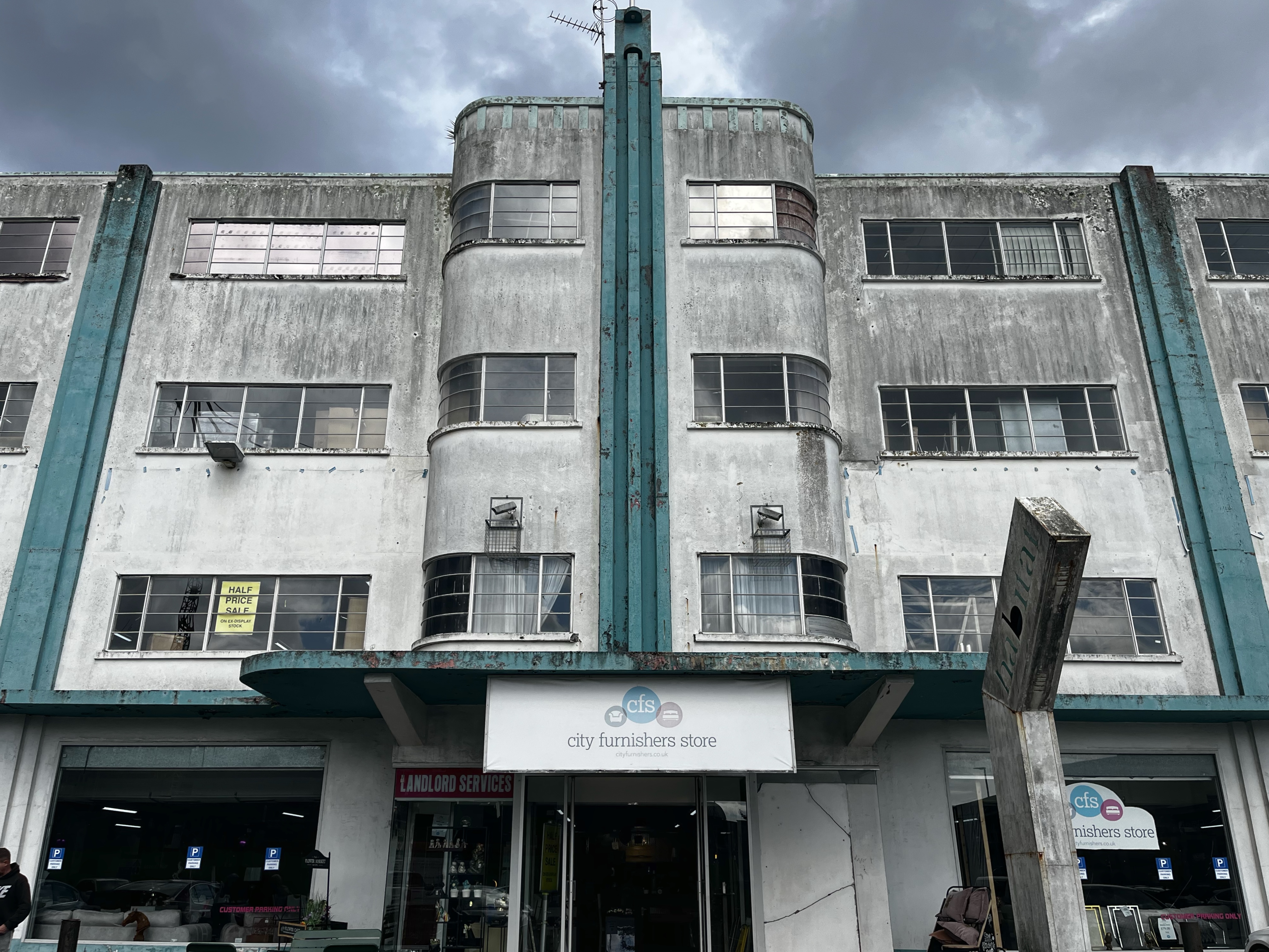
Colin Campbell House & Habitat sign, Plymouth, 2025

A weathered, grey art deco building with teal vertical accents houses a City Furnishers Shop beneath a white awning. Some windows are broken or have bars, and a yellow To Let sign is visible. The sky above is cloudy and dark.
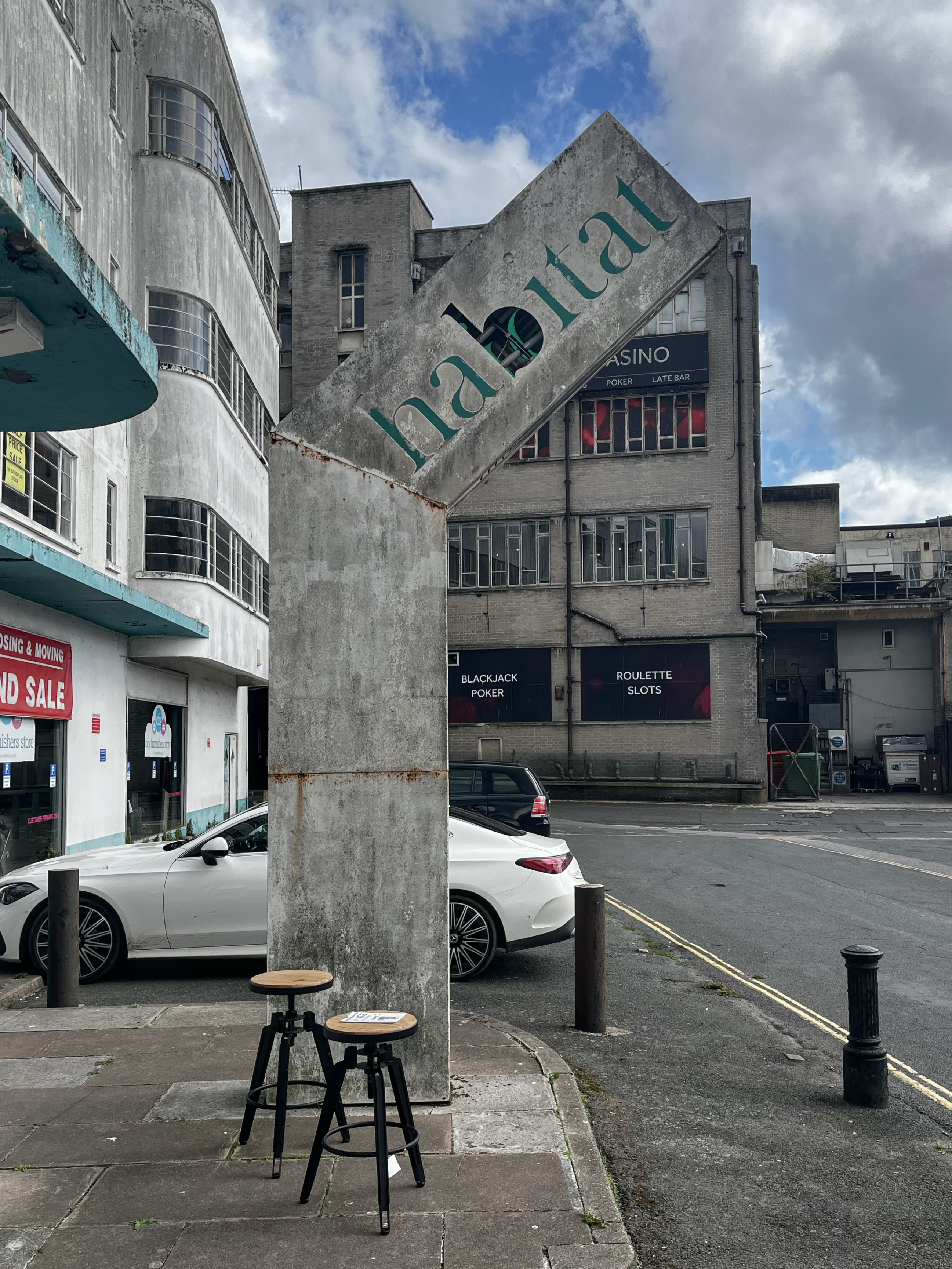
A concrete sign reading “habitat” is bent at a sharp angle on a city street. Two wooden bar stools sit in front of it. Behind, there are old grey buildings, a parked white car, and signs for a casino, all under a partly cloudy sky.

The building, which once housed a car showroom and later a Habitat store, a bookshop, and a furniture shop, failed to secure a heritage listing in 2016, but survived the threat of demolition. It remains one of the few examples of art deco architecture in Plymouth which survived the Blitz. The current tenants of the building have been told to vacate the premises just last week, with the building up for refurbishment into housing. Bring on the uPVC!

Hopefully the sign will be saved – for one, it would look great in my office.

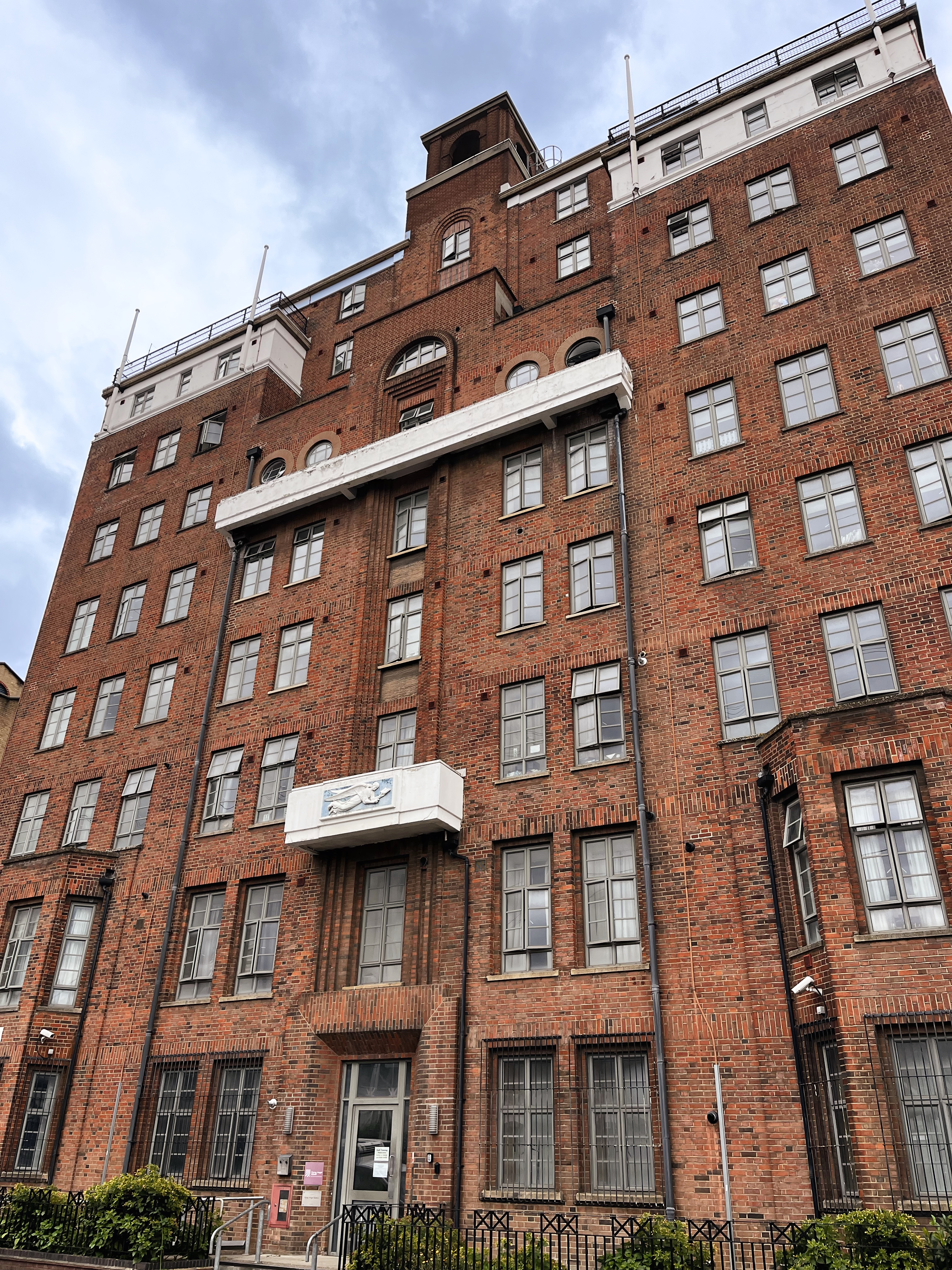
Flying Angel House, Docklands, London, 2025

A tall red brick building with numerous grid-like windows, white trim, and two projecting white balconies. The sky above is cloudy, and a black railing and small green bushes are visible at ground level in front.

Opened in 1936 as The Missions to Seamen Institute, replacing an older Victorian building on East India Dock Road, as part of an Anglican organisation supporting seafarers. This hostel provided 150 bedrooms and related amenities, now in mixed commercial and residential use. The flying angel motif above the main entrance is of particular interest.