#modernism

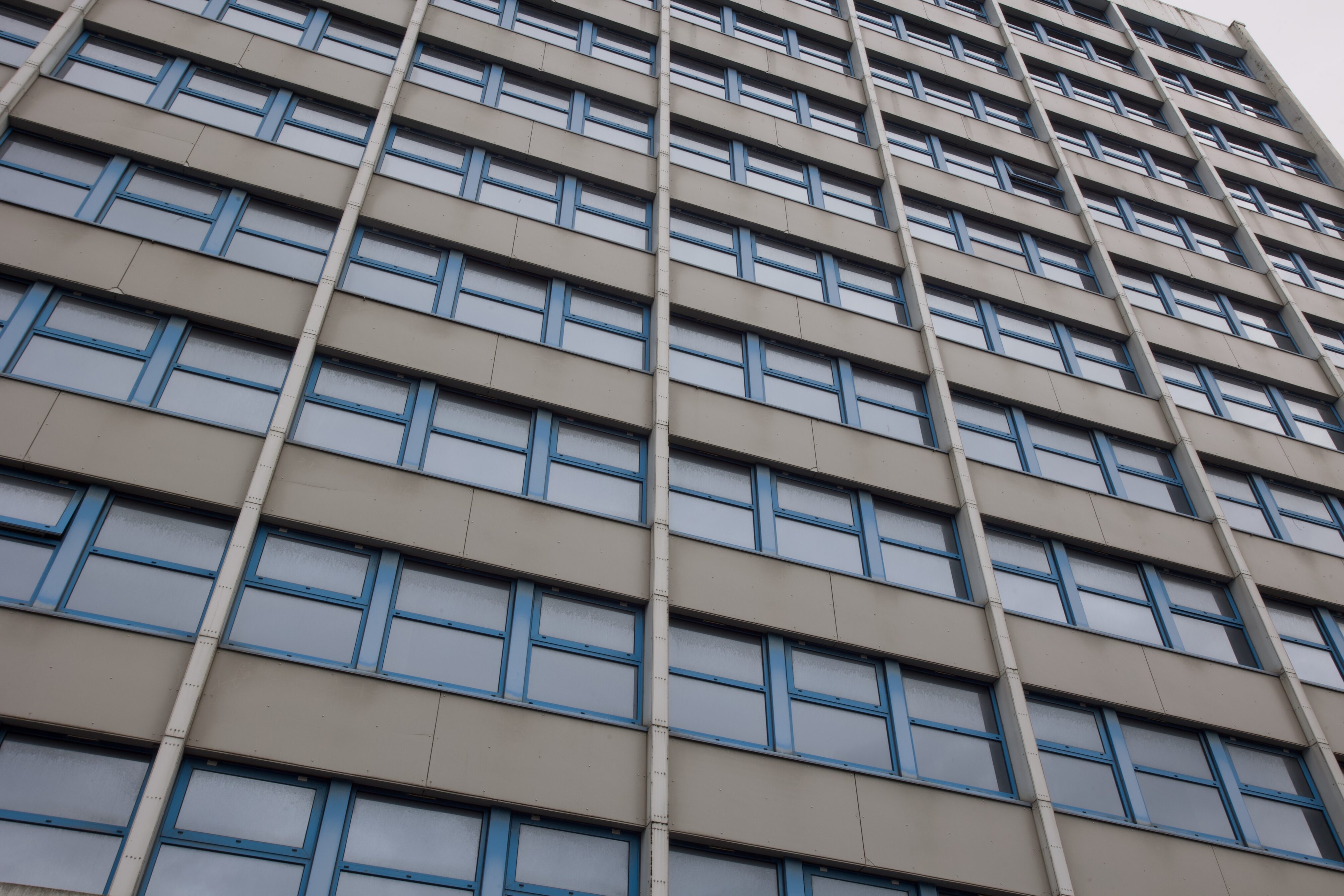
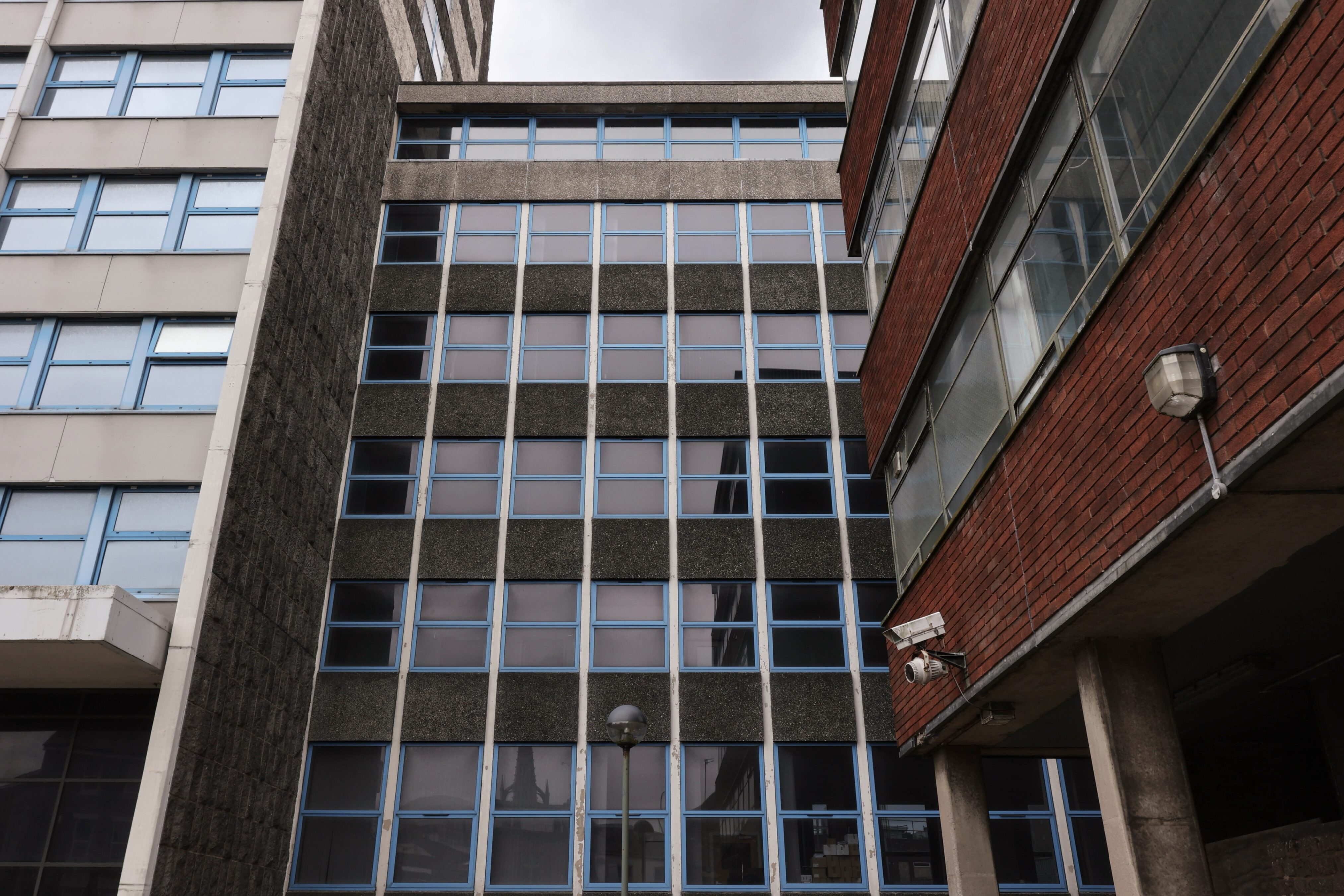
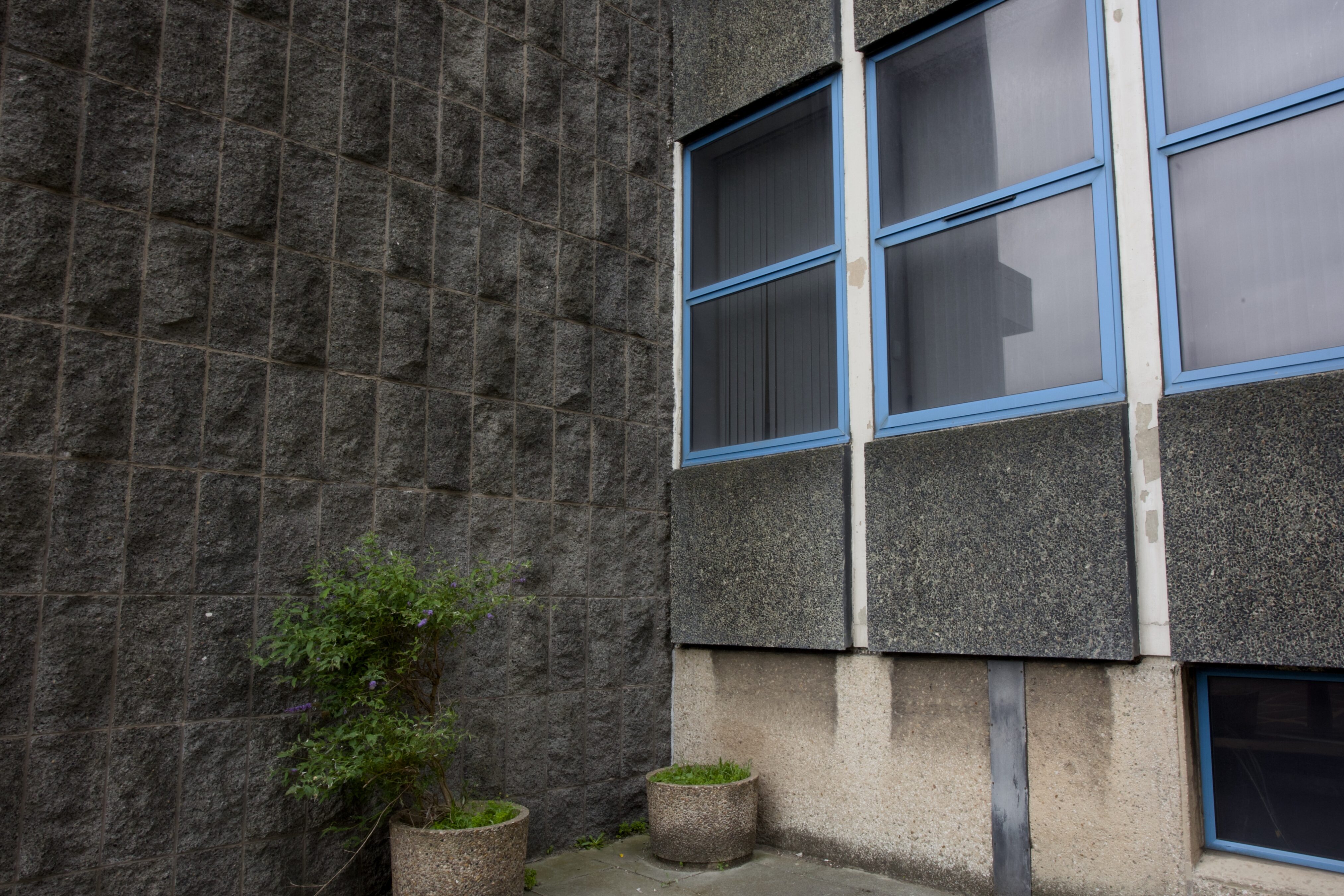
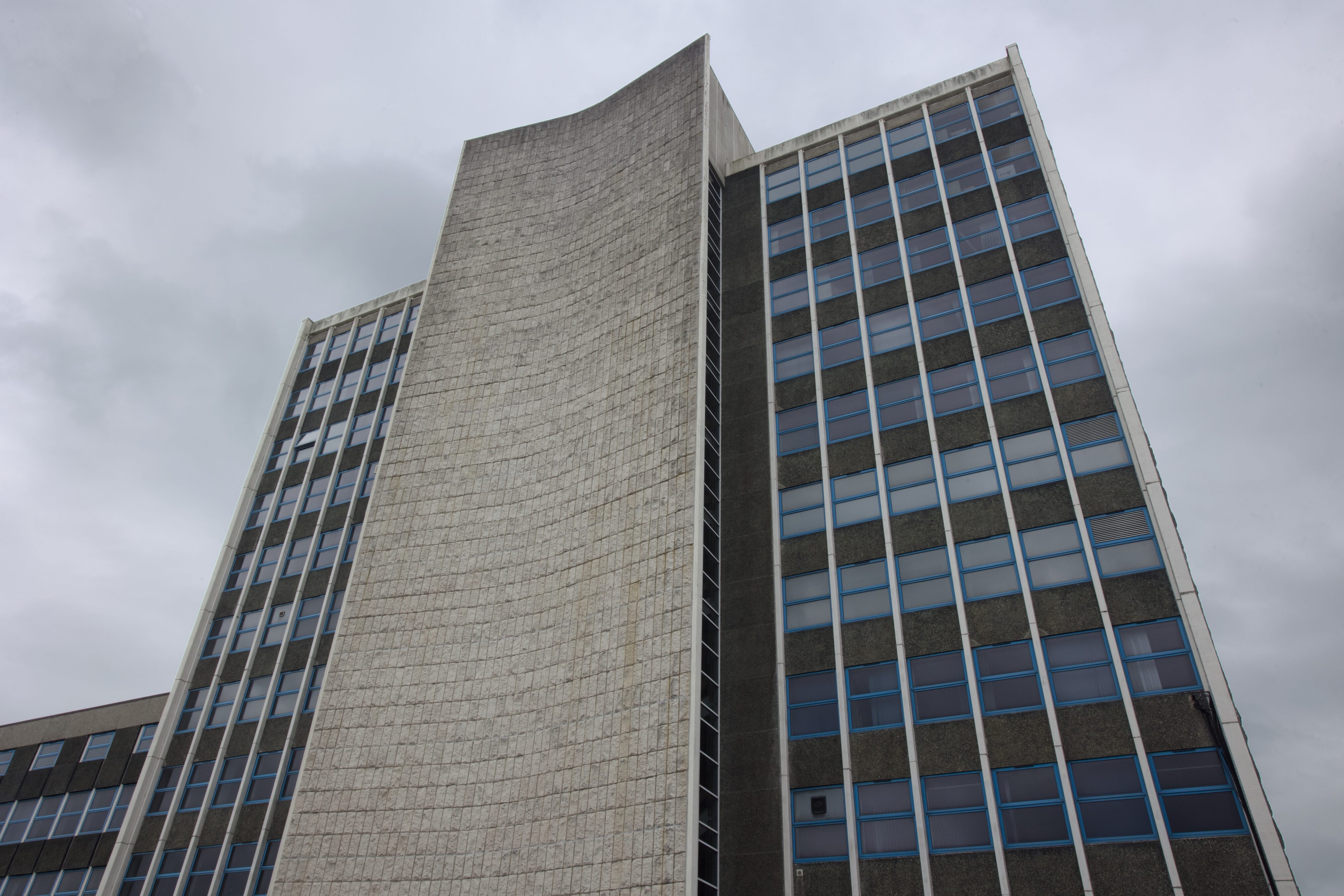
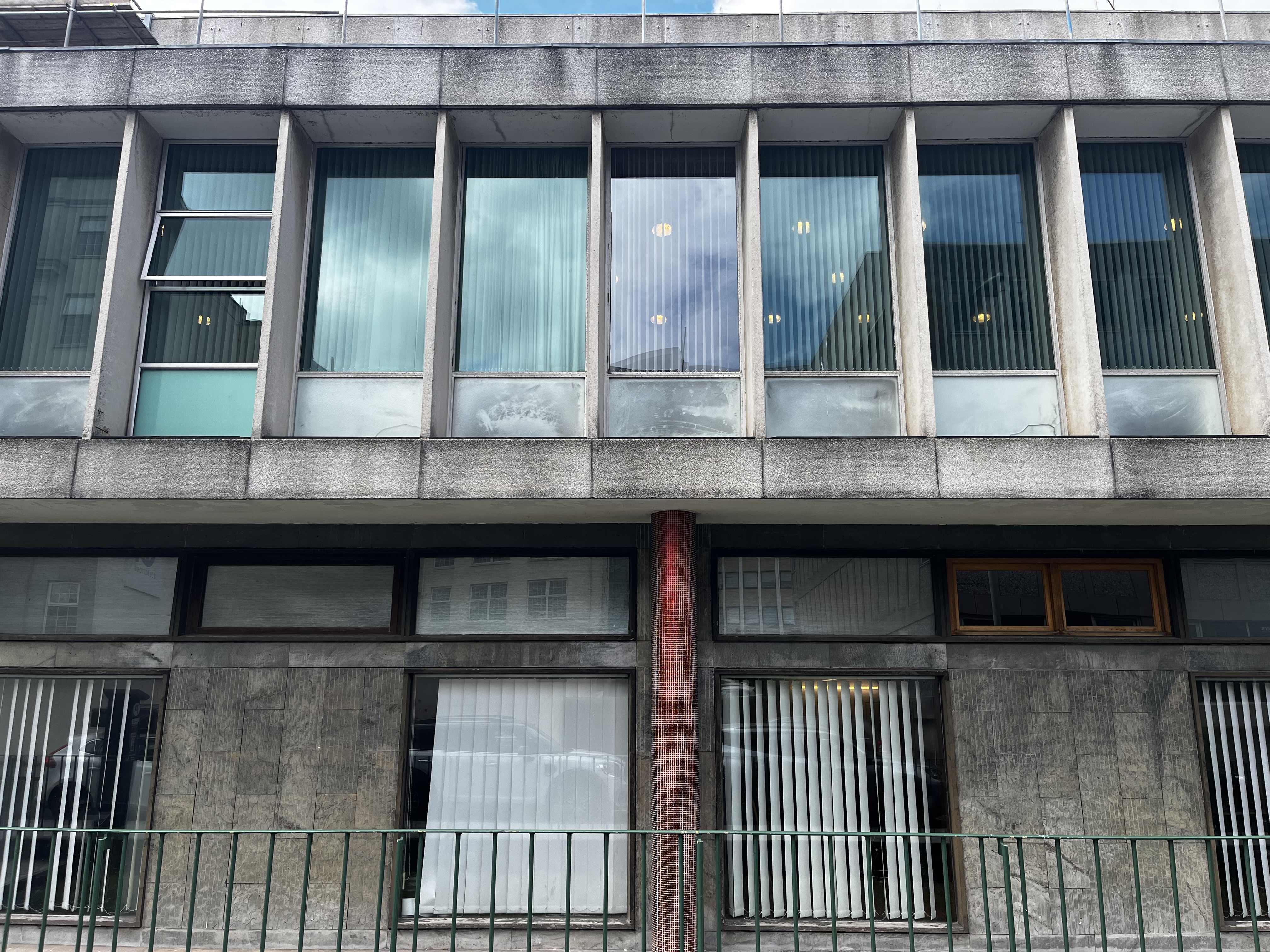
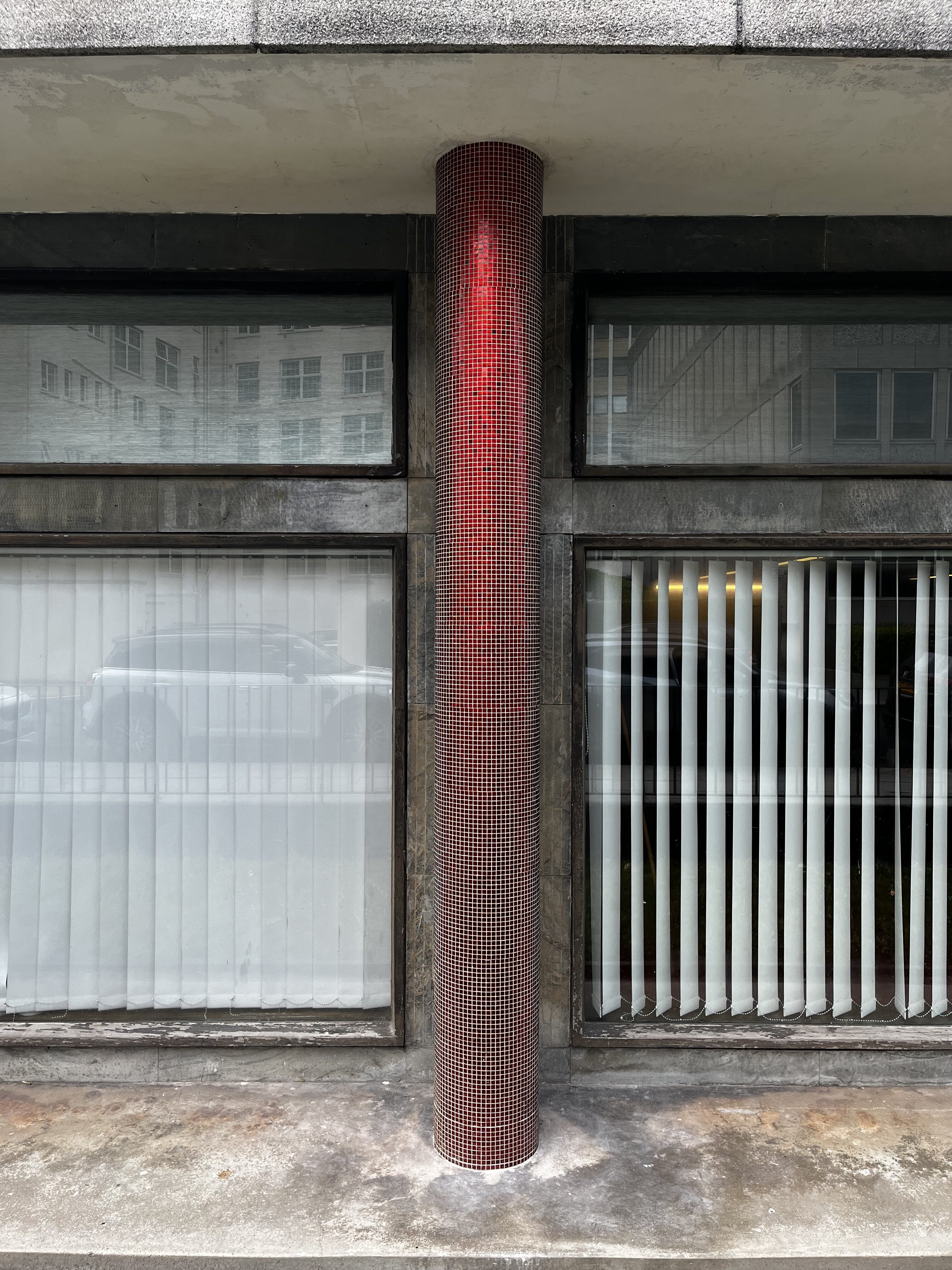
Plymouth Civic Centre & details, 2025

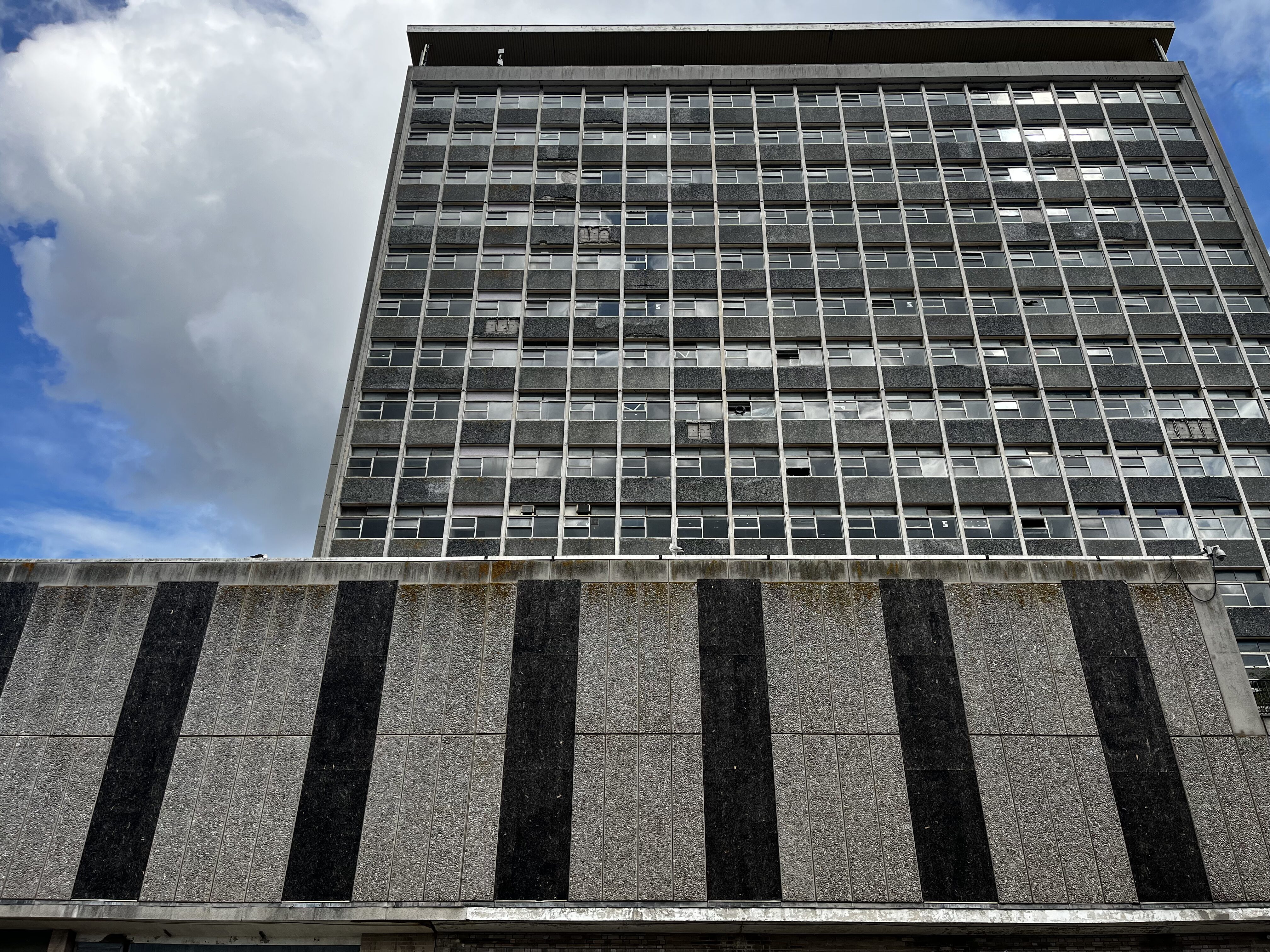
A tall, rectangular, concrete building with many small, dirty windows stands behind a shorter structure with alternating vertical dark and light stripes. The sky is partly cloudy, with blue sky visible on the left and a large white cloud on the right.
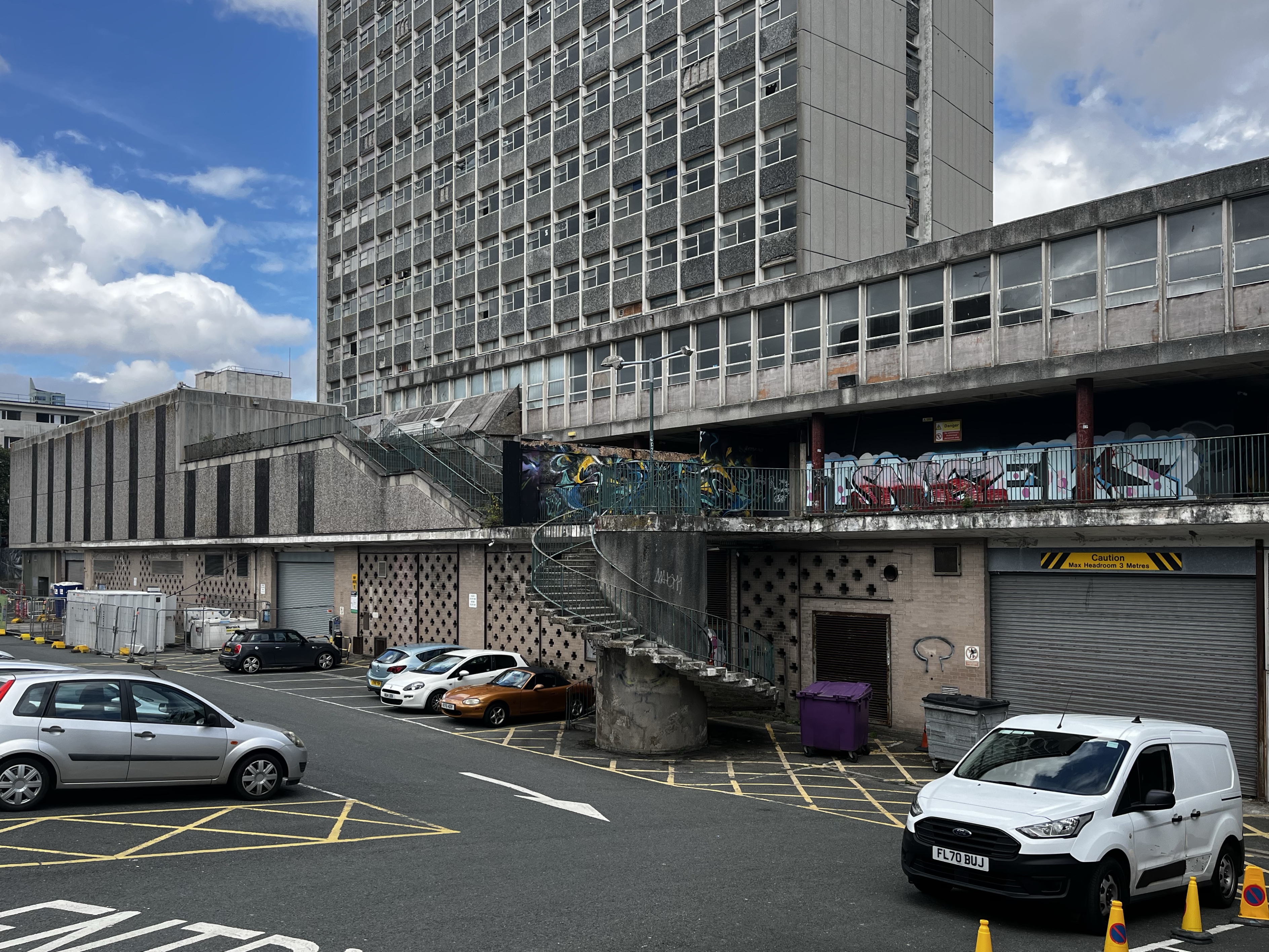
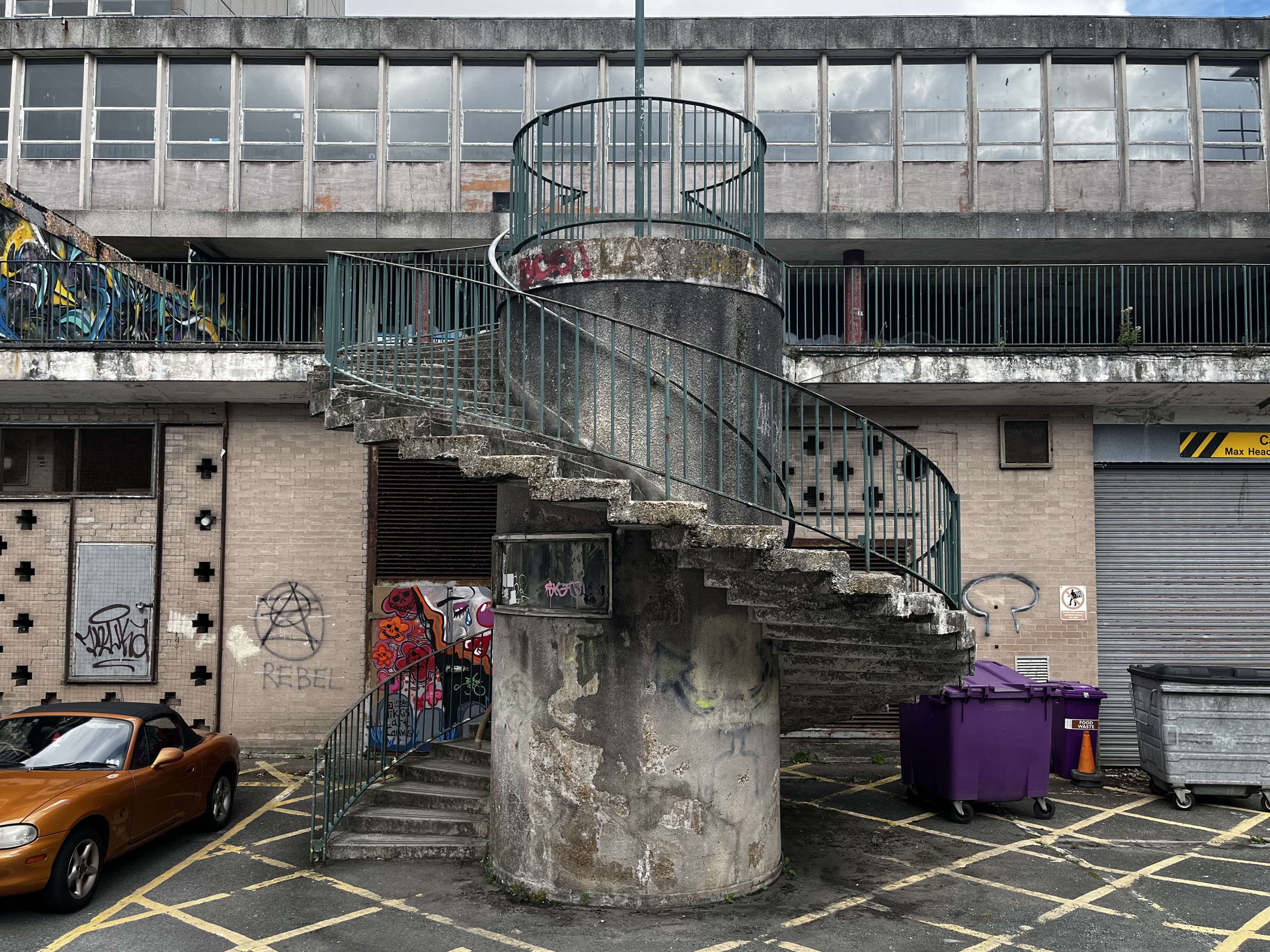
A grey, concrete car park by a brutalist tower block. Several cars are parked below. A spiral staircase leads to a walkway covered in colourful graffiti. The scene is urban, with cloudy blue sky above and yellow road markings on the ground.
A concrete spiral staircase with a green metal railing wraps around a cylindrical pillar in front of a graffiti-covered, urban building. Yellow parking lines, a parked orange car, purple bins, and industrial details are visible in the scene.
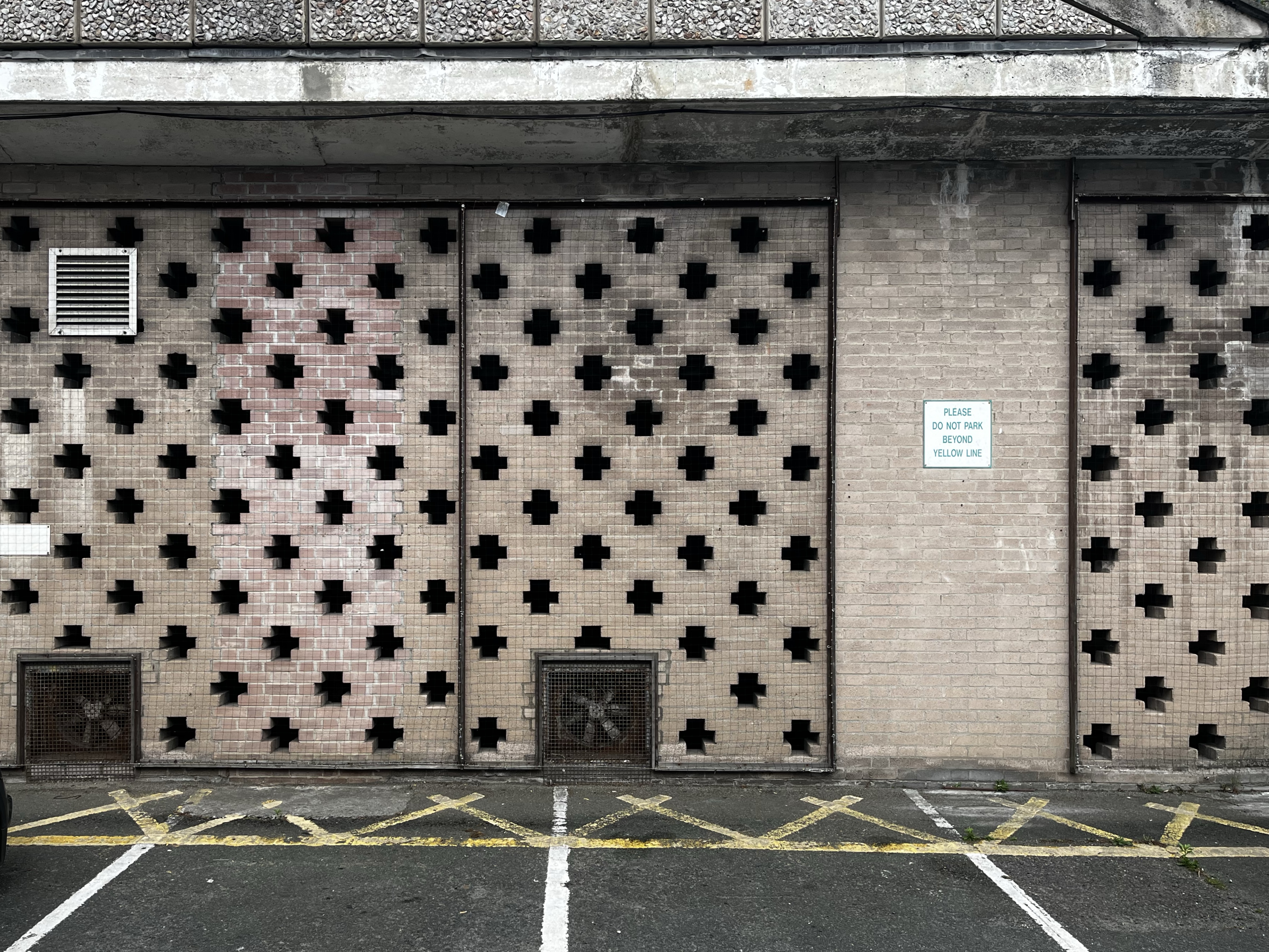
A brick wall with a grid of cross-shaped cut-outs, two vents near the bottom, and a white sign reading “Please do not park in front of roller bar.” Yellow diagonal parking lines and white lines mark the ground in front.

Designed by city architect Hector Stirling, completed in 1962. After several failed schemes to modernise these former Plymouth City Council offices, plans are currently underway to convert the lower floors of the building into a new campus for City College Plymouth, with housing on the floors above.

Dedicating this post to my beleaguered boyfriend, who detests this building.
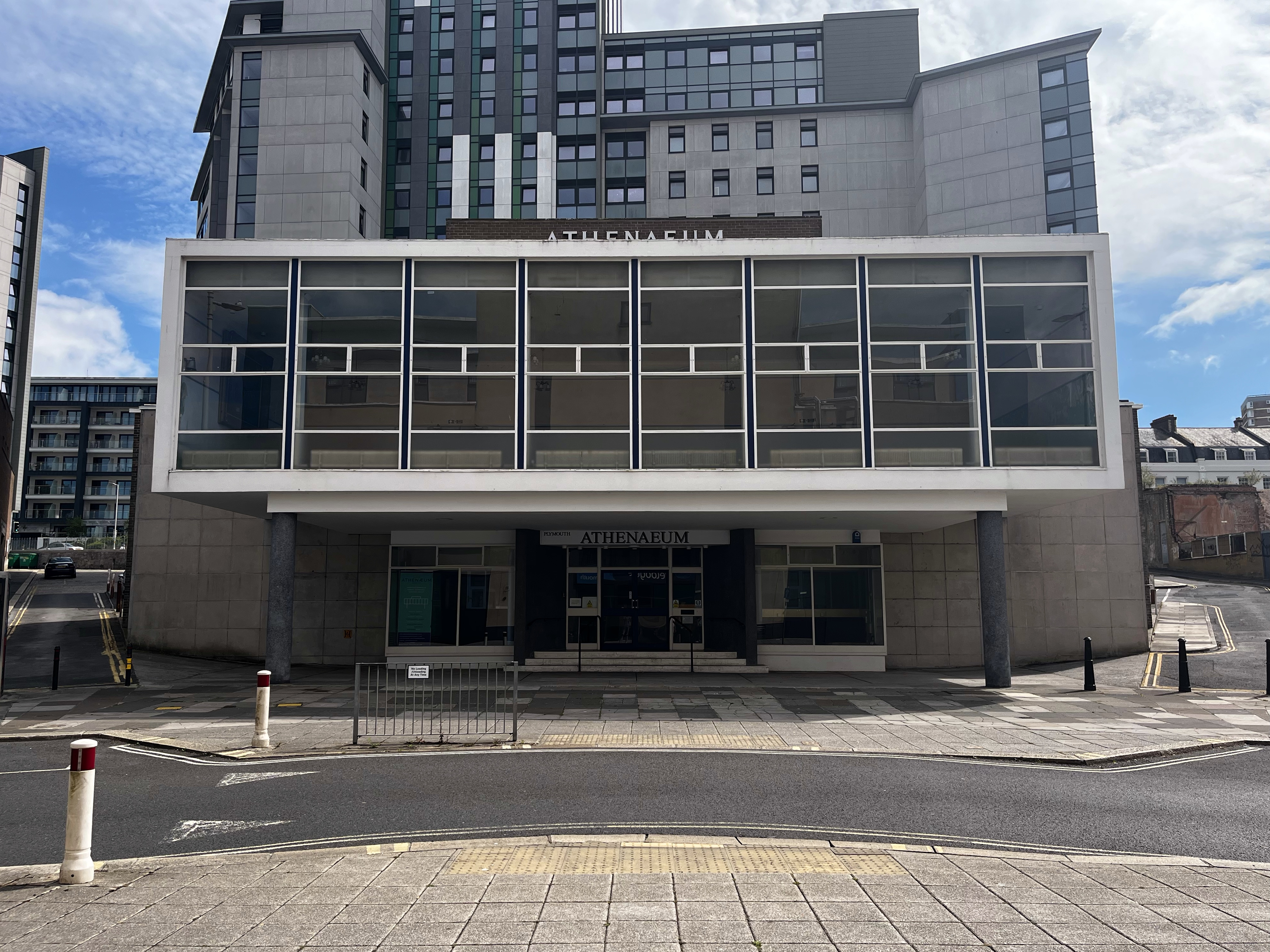
Plymouth Athenaeum, 2025

A modern, rectangular building labelled “ATHENAEUM” features large glass windows on the upper floor and a sheltered entrance below. The facade is grey, with bollards, a ramp, and a pedestrian crossing visible in front on a sunny day.

The theatre was used as a studio by neighbour Westward Television Studios with a tunnel linking the two together. In 1963 John Lennon, Paul McCartney and George Harrison escaped fans by using the tunnel.

Plymouth Athenaeum, Wikipedia

Built in 1961 following the bombing of the society’s previous home in the Blitz, designed by Walls and Pearn.
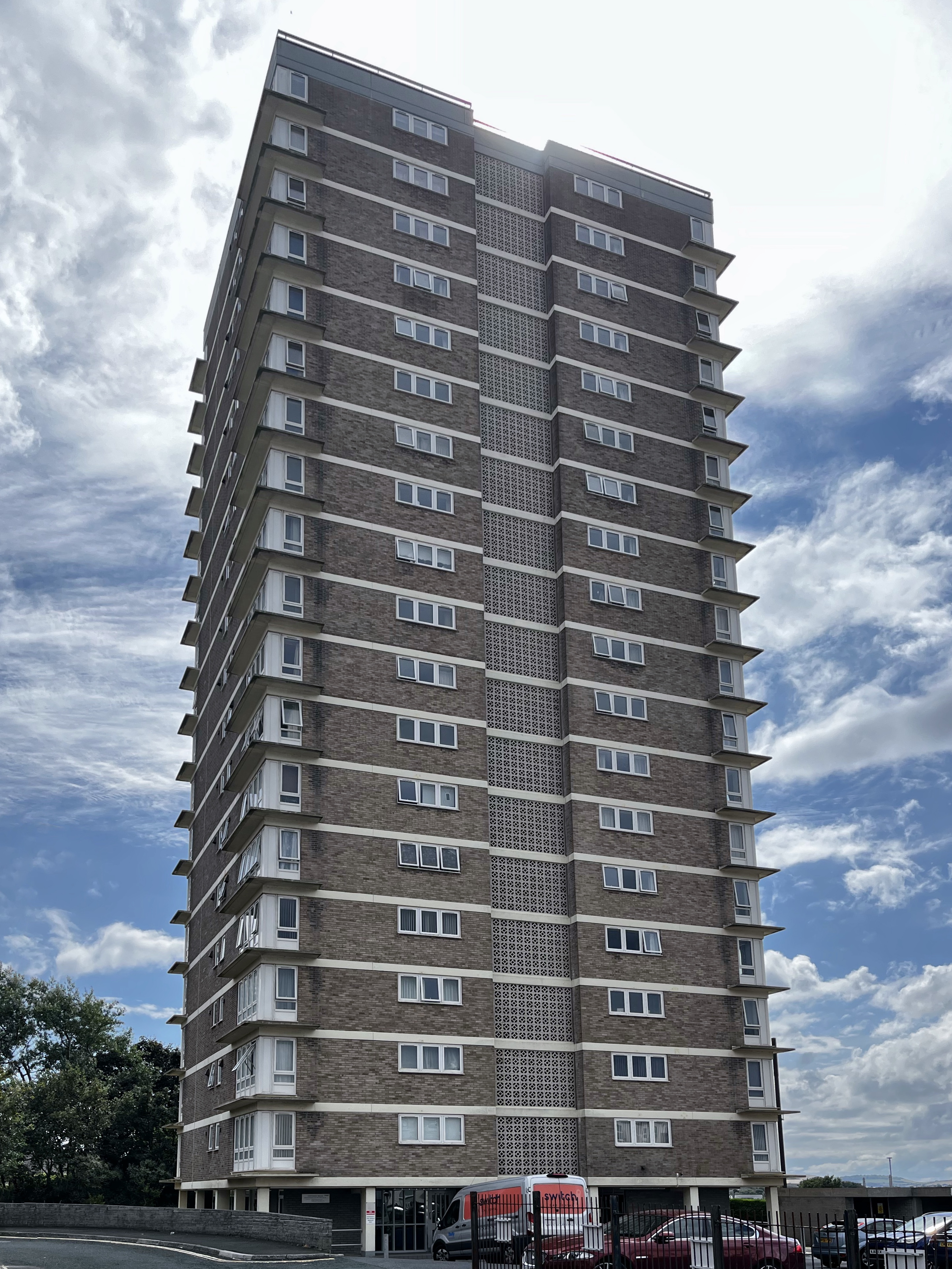
Leigham Court, Plymouth, 2025

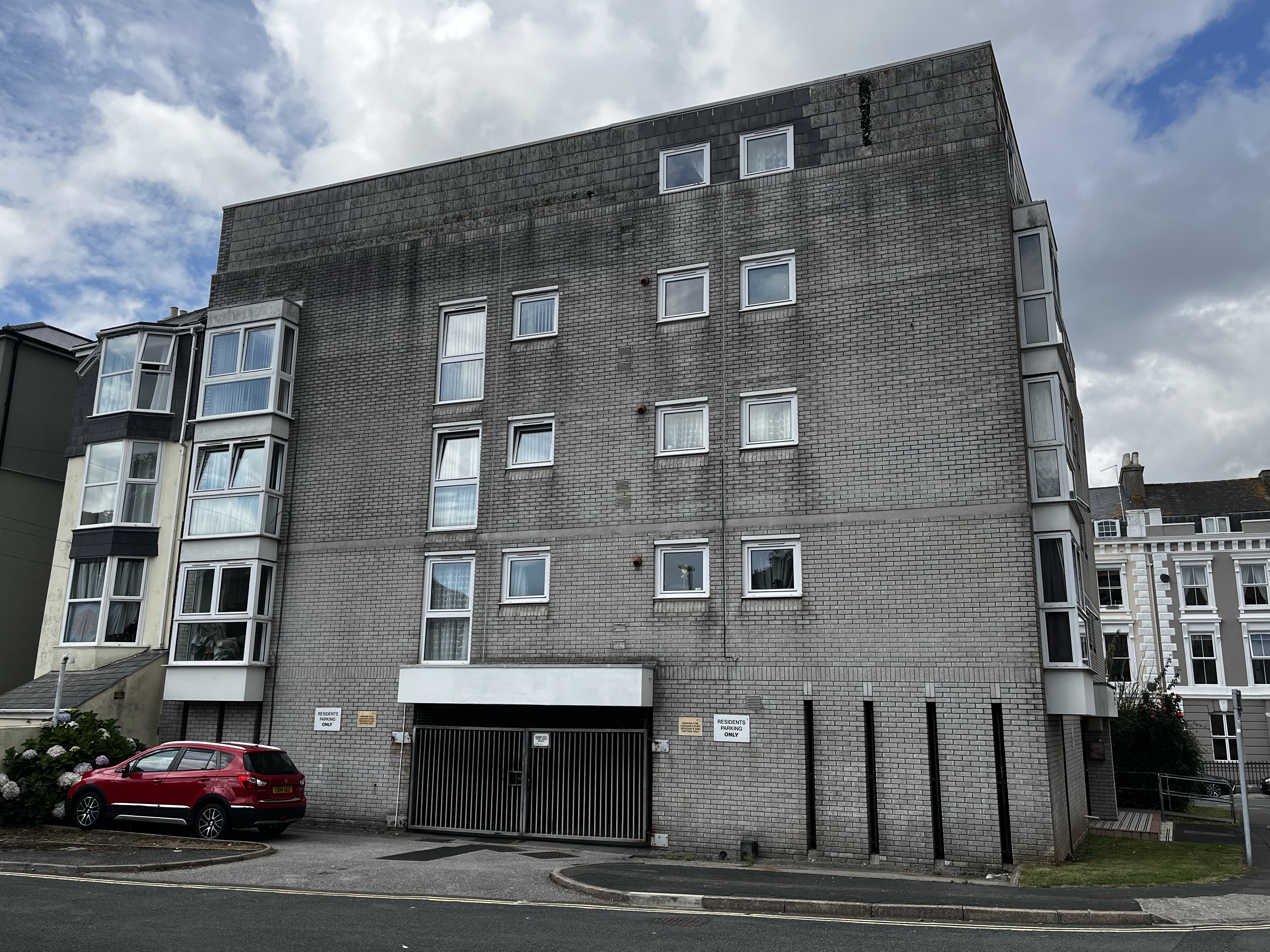
A large, grey, four-storey block of flats with many rectangular windows. The façade is plain and made of concrete bricks. A car park is visible below, with a red car parked on the left. The sky is cloudy and other buildings are partly visible nearby.
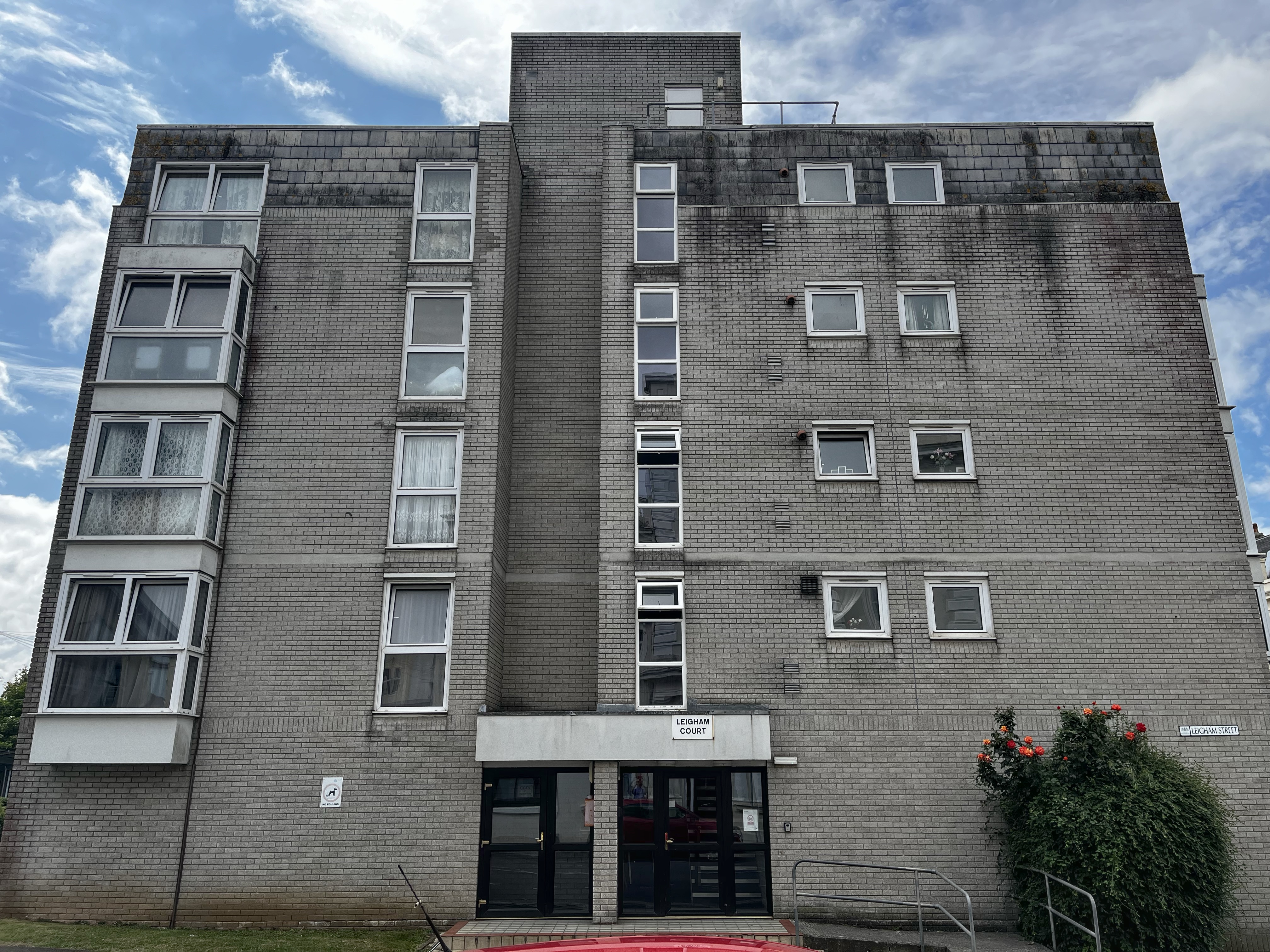
A five-storey, grey brick apartment building with large rectangular windows, some protruding in box-like frames. Double glass doors mark the entrance, with a sign reading “Osney Court” above. A bush with orange flowers grows on the right, under a partly cloudy sky.
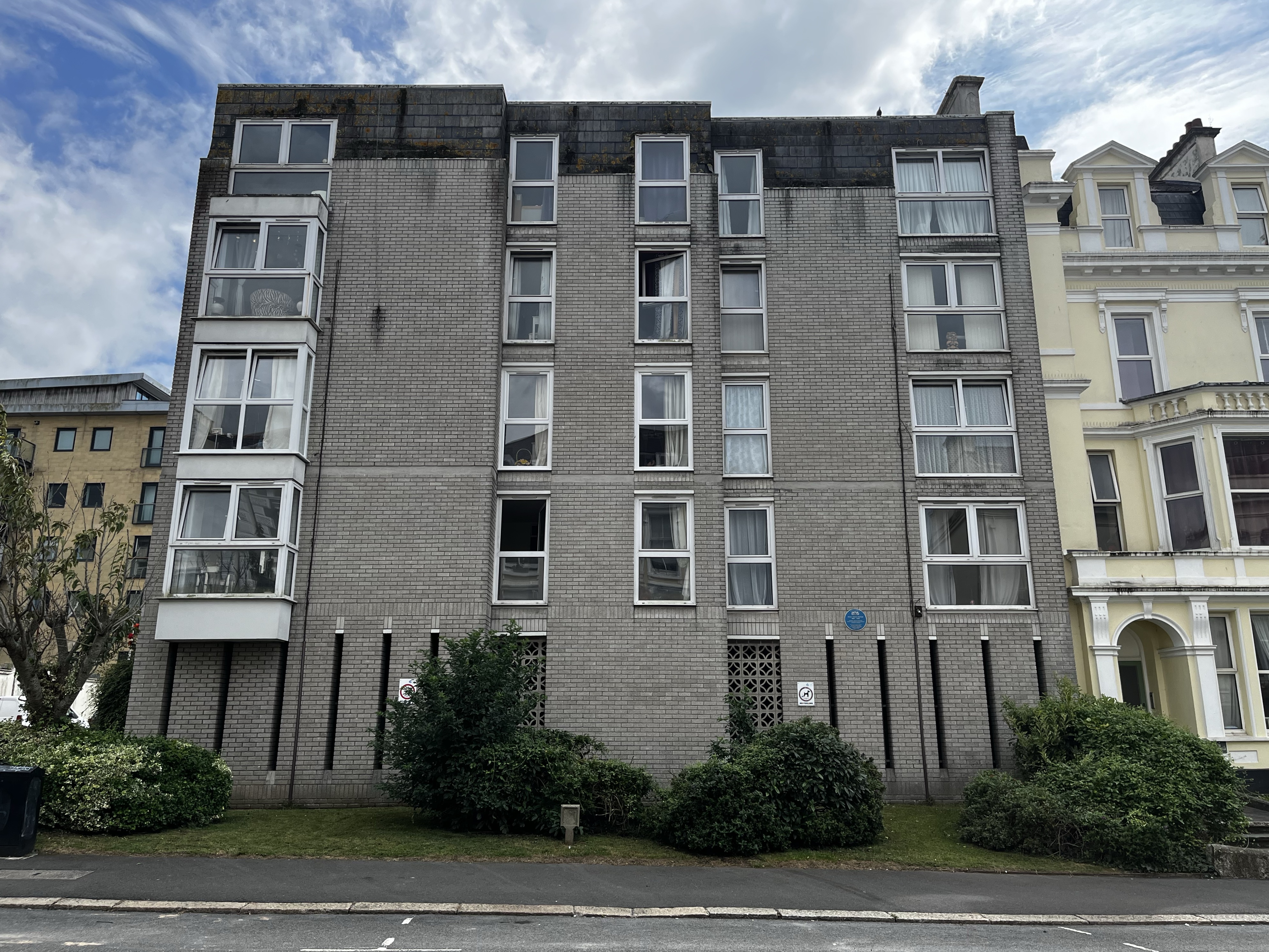
A five-storey grey brick block of flats with large pane windows, some open. Bushes and small shrubs line the base. The building sits between a pale yellow house and another structure. A blue plaque is visible on the wall, and the sky is partly cloudy.
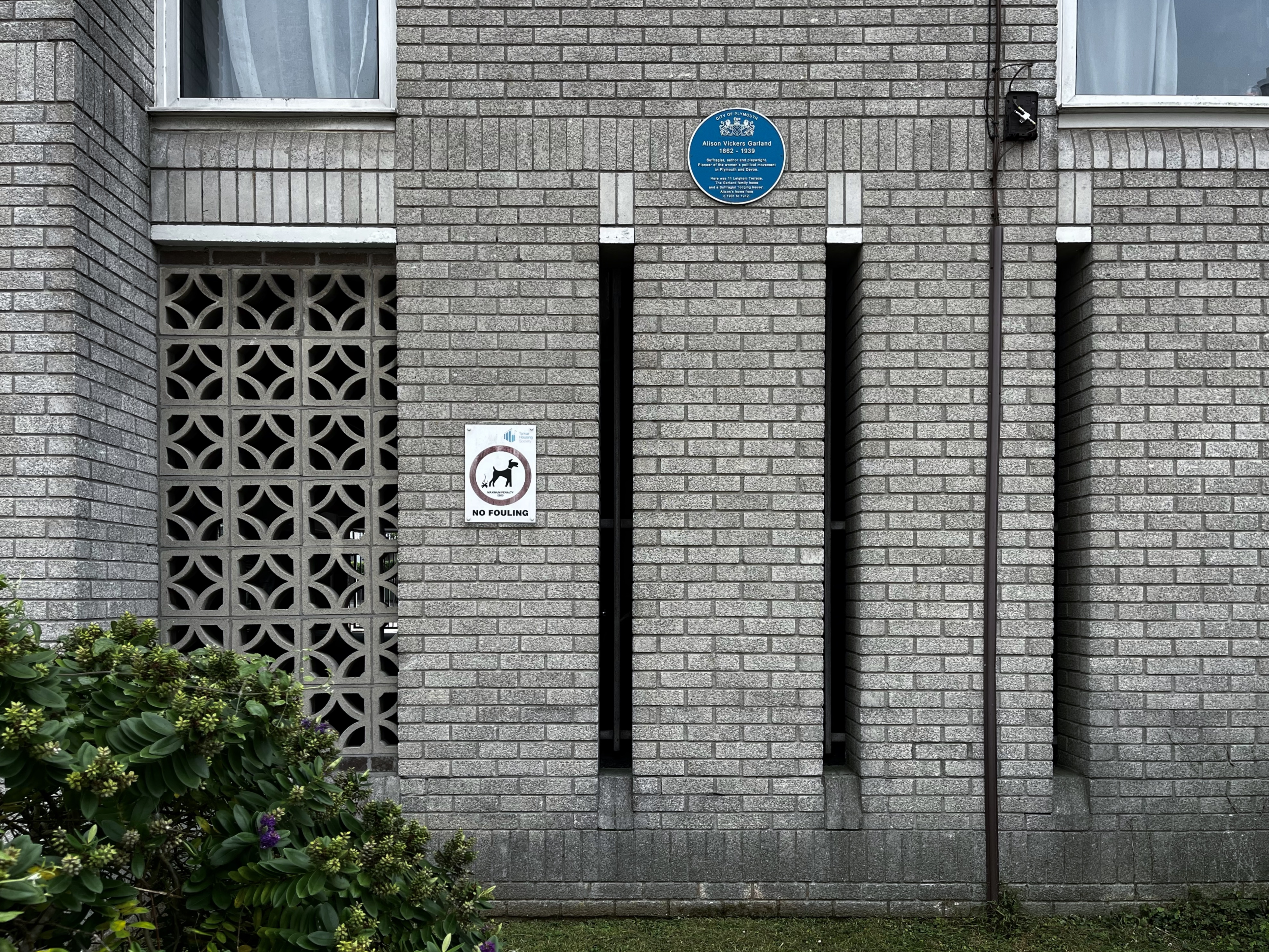
A grey brick building with vertical slits, a blue English Heritage plaque above, and a No Parking sign on the wall. Decorative concrete blocks are to the left, a bush with green leaves in the foreground, and windows near the top.

Finally, a building so unremarkable that I couldn’t find any historical information about it! However, the ground-level details still appealed to me.

The blue plaque is dedicated to Alison Vickers Garland, a suffragist whose family home stood on this site.